Media/Digital Literacy Propaganda
Exposing “Media & Digital Literacy”: The Rebranded Agenda in Your Child’s Classroom
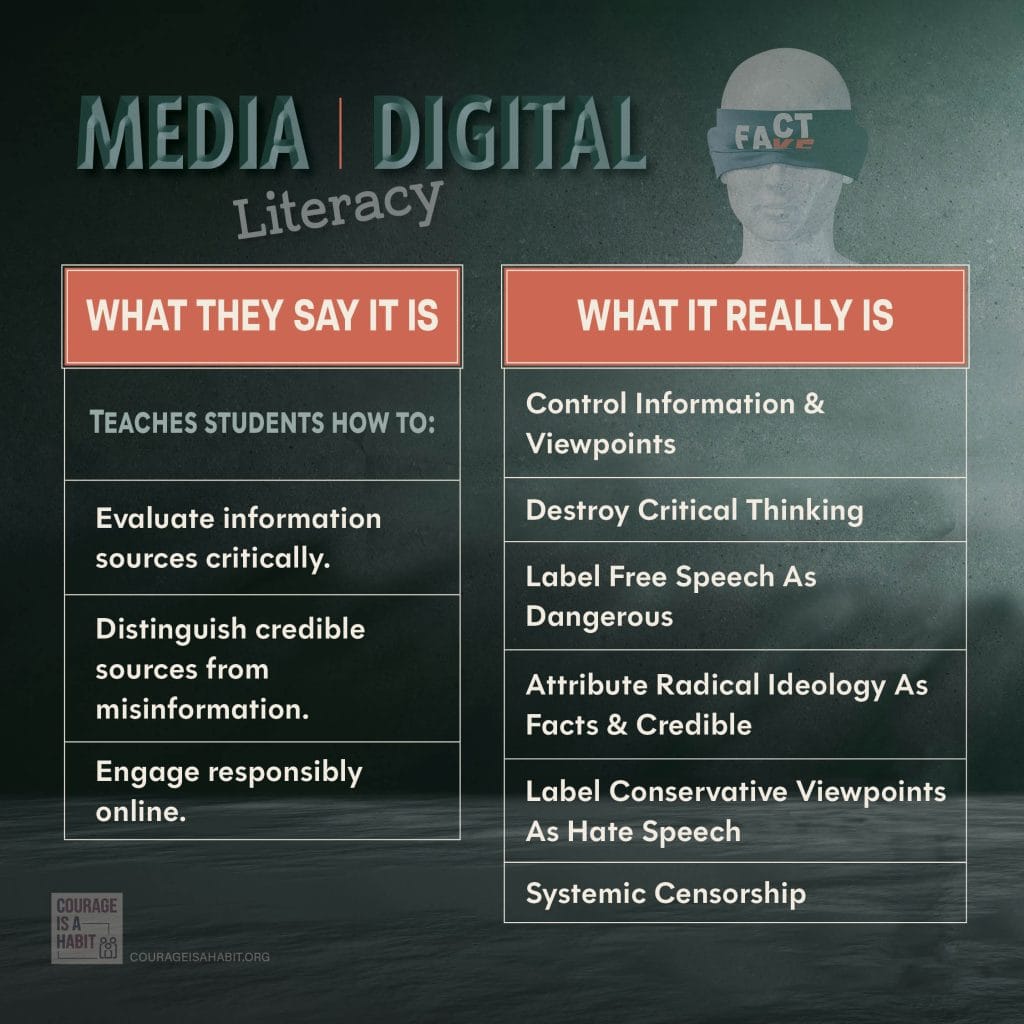
To most parents, teaching children “Media & Digital Literacy” sounds like a great idea. Schools claim these programs teach kids how to evaluate information, spot fake news, and engage responsibly online.
In reality, it is a Trojan horse designed to control public discourse and train children what to think, not how to think.
Our latest report exposes how standard critical thinking has been replaced by a systemic pipeline of political indoctrination and why every parent needs to pay attention.
What Parents Need to Know
1. Rooted in Ideological Control
Modern “Media Literacy” is a rebranded version of Marxist philosopher Antonio Gramsci’s theory of Cultural Hegemony. Its goal is to create an information ecosystem so completely saturated by one worldview that anyone who thinks differently is instantly viewed as dangerous or hateful.
2. Taxpayer Dollars Used for Political Attack Propaganda
Following the 2016 election, institutional elites weaponized public education to regain control over public discourse. Under the Biden administration, the Department of Homeland Security (DHS) awarded a $700,000 grant to the Media Education Lab at the University of Rhode Island, led by Dr. Renee Hobbs, the primary architect of K-12 media literacy. The explicit mission? To write content criticizing Donald Trump and conservative viewpoints under the guise of “counter-propaganda” and “media literacy”.
3. Blacklisting Conservative Viewpoints
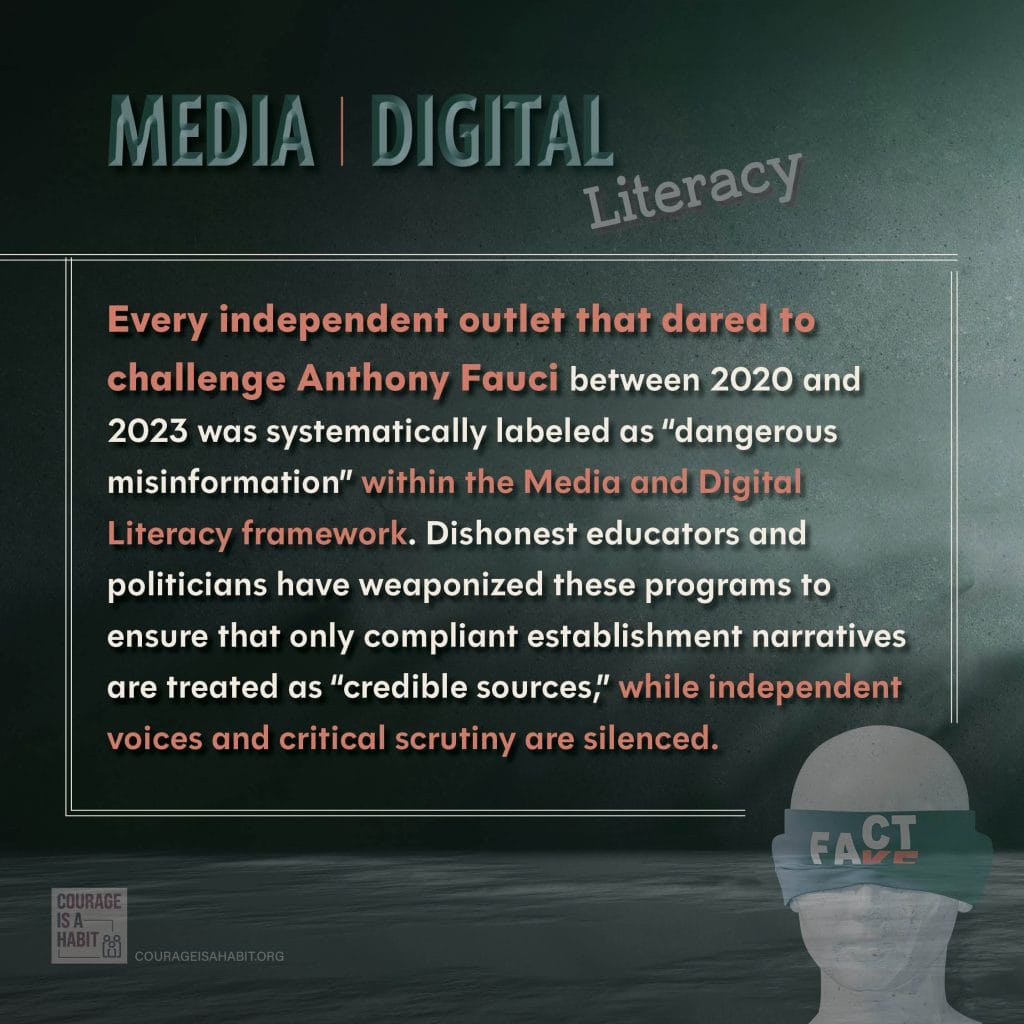
Through university teacher-credentialing programs, these frameworks train future educators to treat legacy establishment outlets (like CNN, MSNBC, and Vox) as unquestionable truth, while automatically labeling independent and right-leaning journalism (like The Blaze, The Daily Wire, The Daily Signal, The Federalist, Michael Shellenberger, Nick Shirley, Joe Rogan, and Catherine Herridge) as unverified “disinformation”. This infrastructure even helped capture platforms like Wikipedia, leading to the systematic blacklisting of conservative media.
4. Turning Classrooms into Activism Pipelines
Instead of fostering open debate, K-12 “media literacy” lessons teach students to submit to appeals to authority and produce progressive media advocacy as graded assignments.
Why You Need to Read This Tool
If your school district is introducing “Media Literacy,” “Digital Literacy,” “Internet Safety,” or “Fact-Checking” initiatives into the K-12 curriculum, you are looking at a system designed to bypass parental oversight and neutralize critical thinking.
This report provides the receipts, quotes, and funding paper trails you need to expose this agenda at local school board meetings and protect your children from institutional indoctrination.
Who is Renee Hobbs?
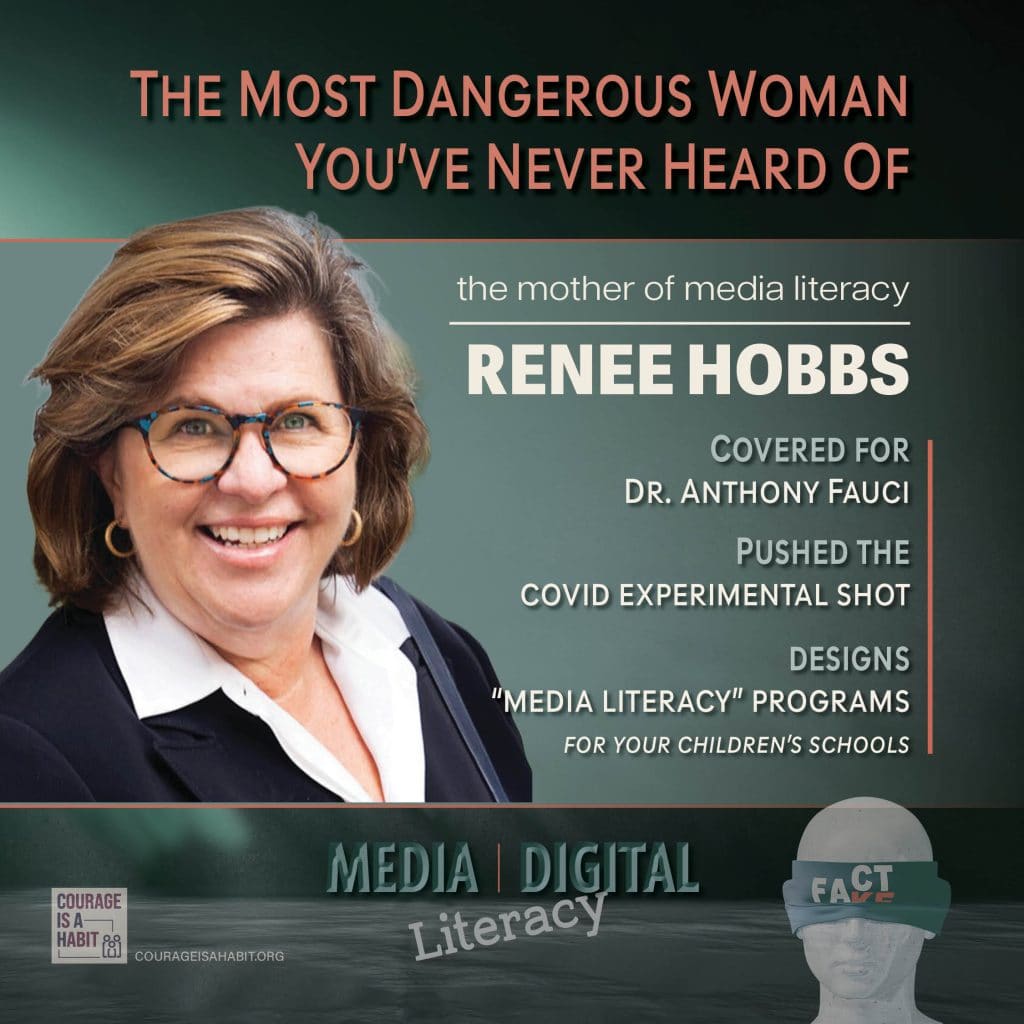
- The mother of “media literacy”.
- Covered for Dr. Anthony Fauci’s lies
- Pushed the COVID experimental shot.
- Trains education & government officials to spread leftwing propaganda and counter truth through her organization Media Education Lab.
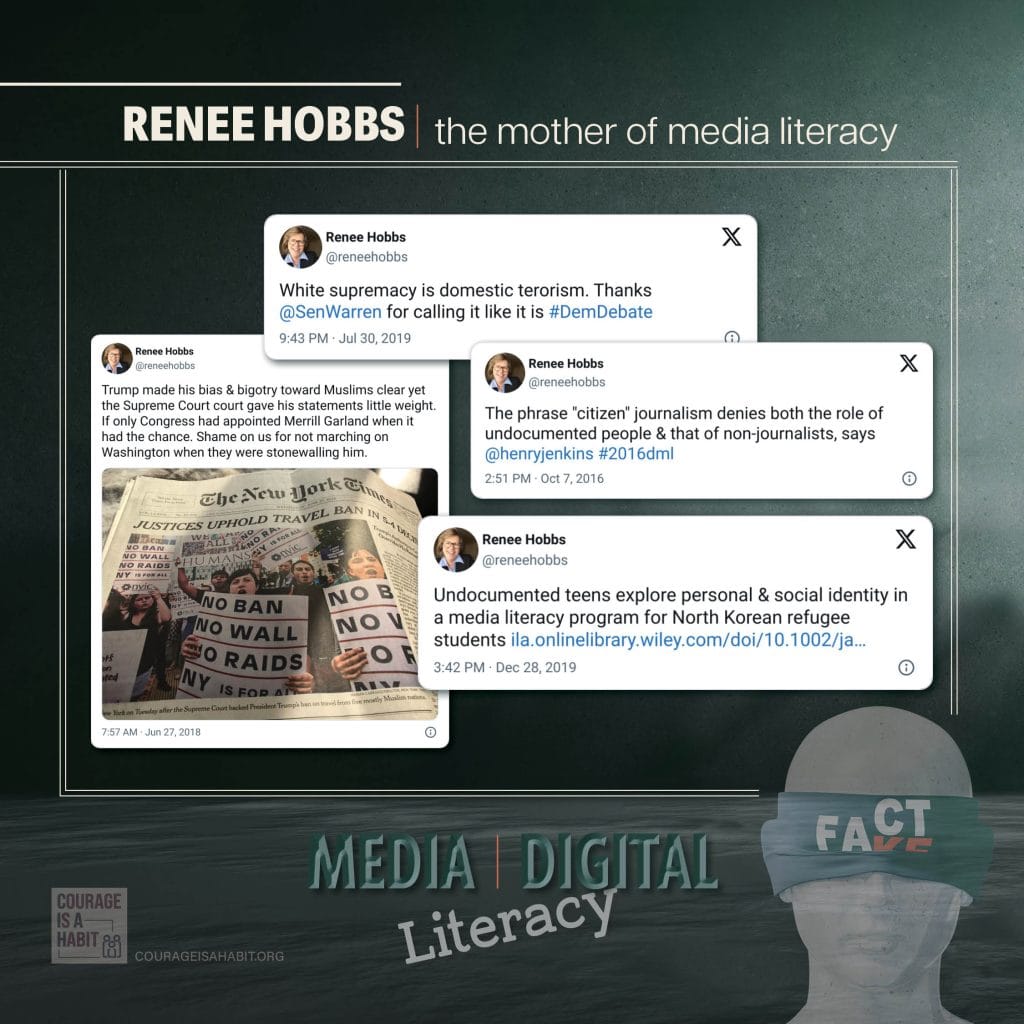
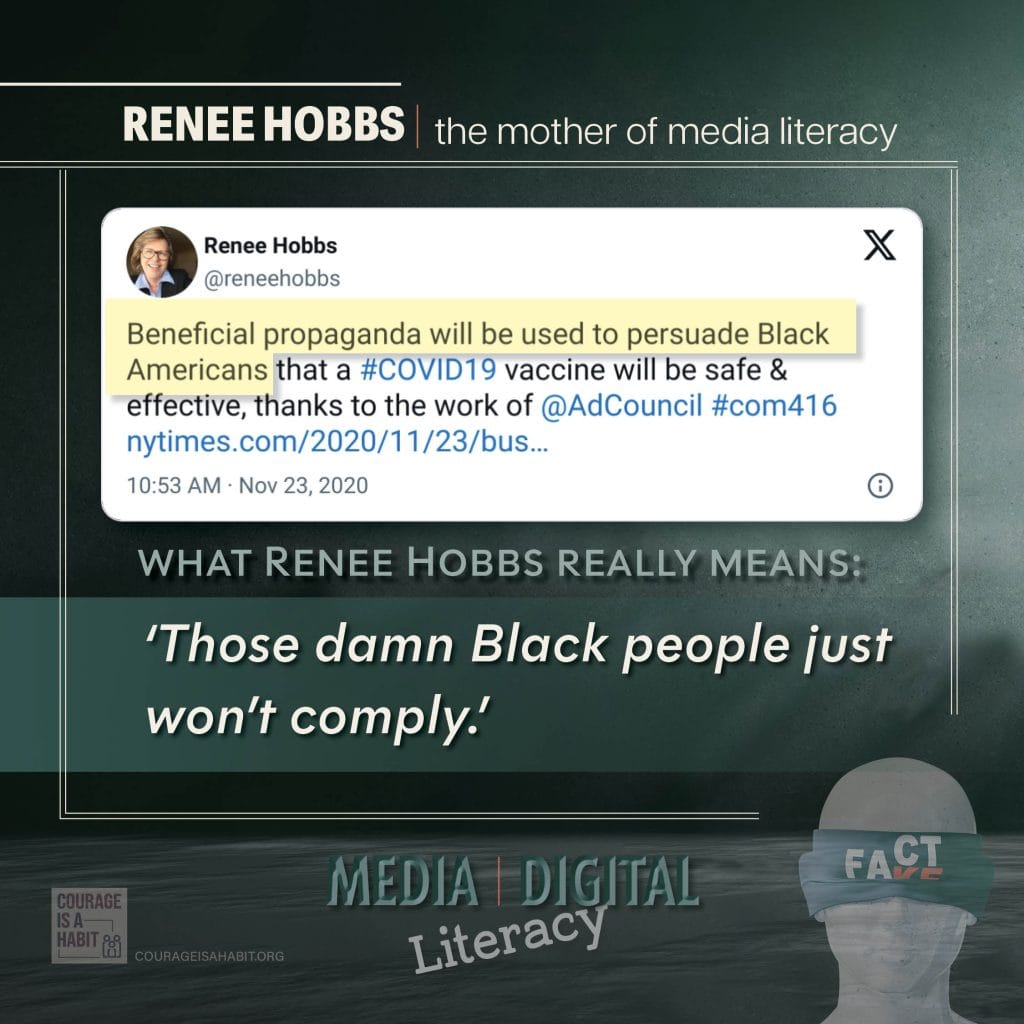
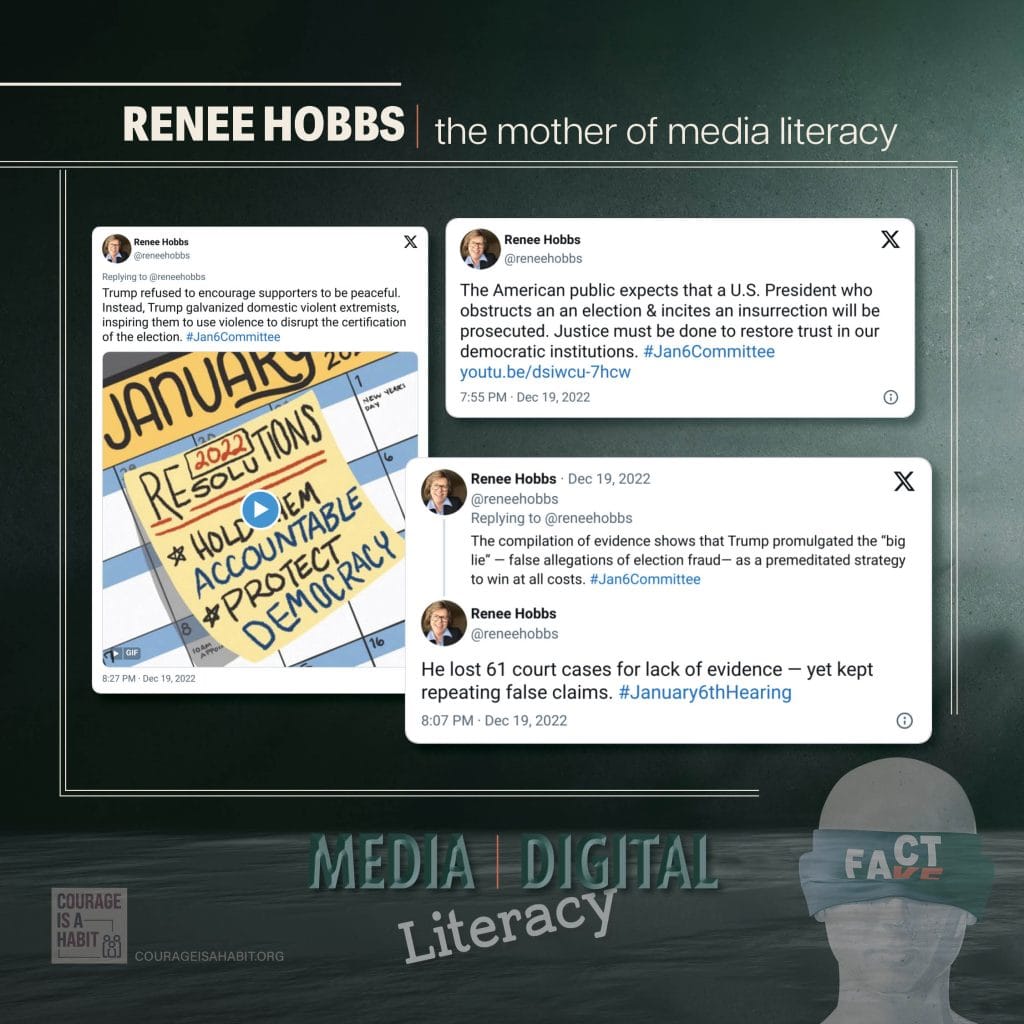
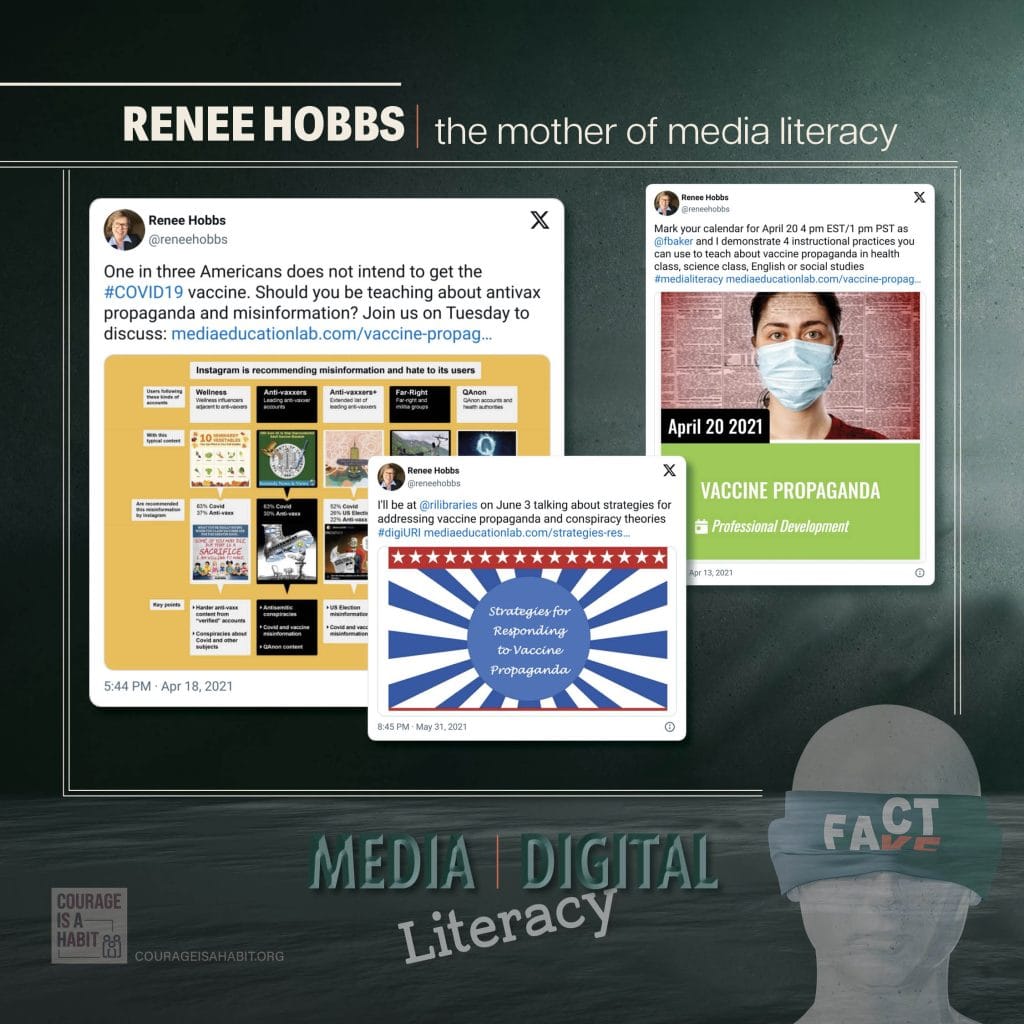
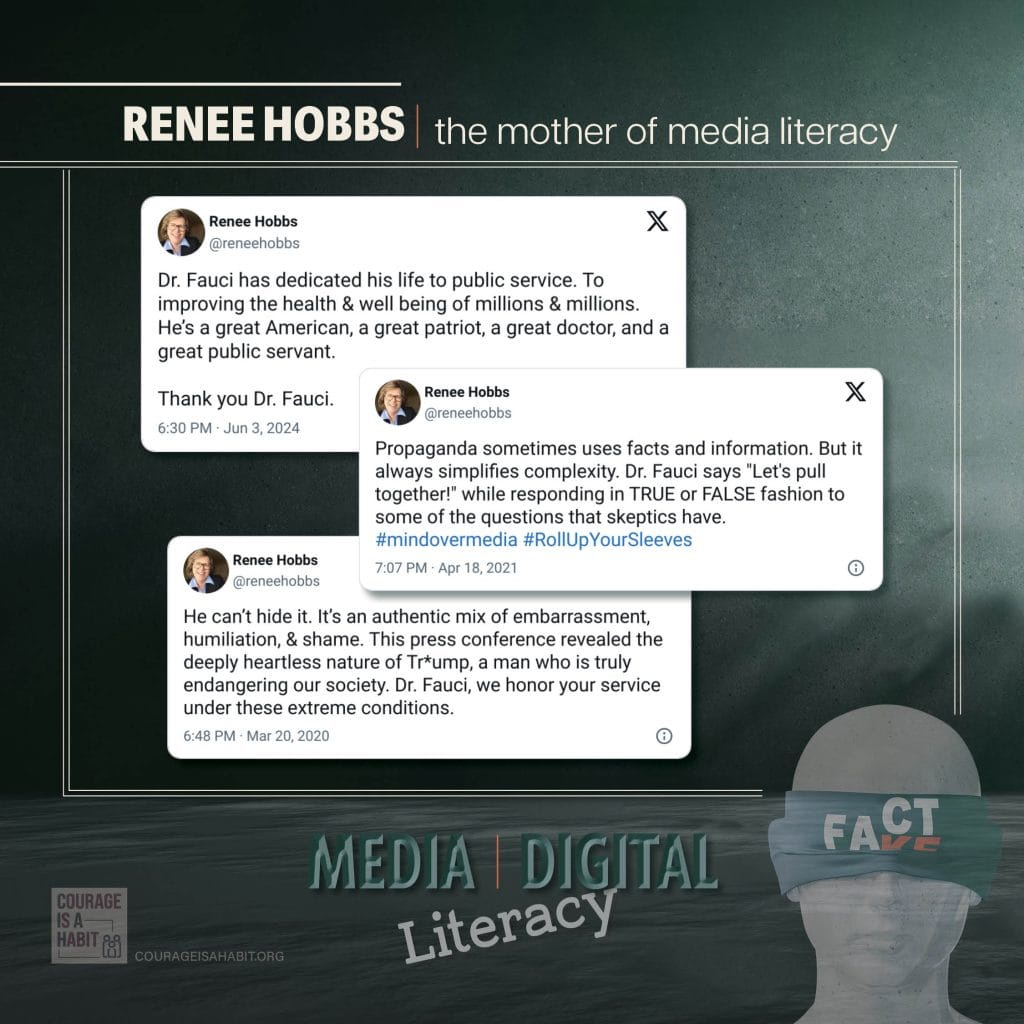
Renee Hobbs is a crucial part of legacy media that produces propaganda like their #RollUpYourSleeves campaign to push the experimental COVID vax. The video below was from April 13, 2021.
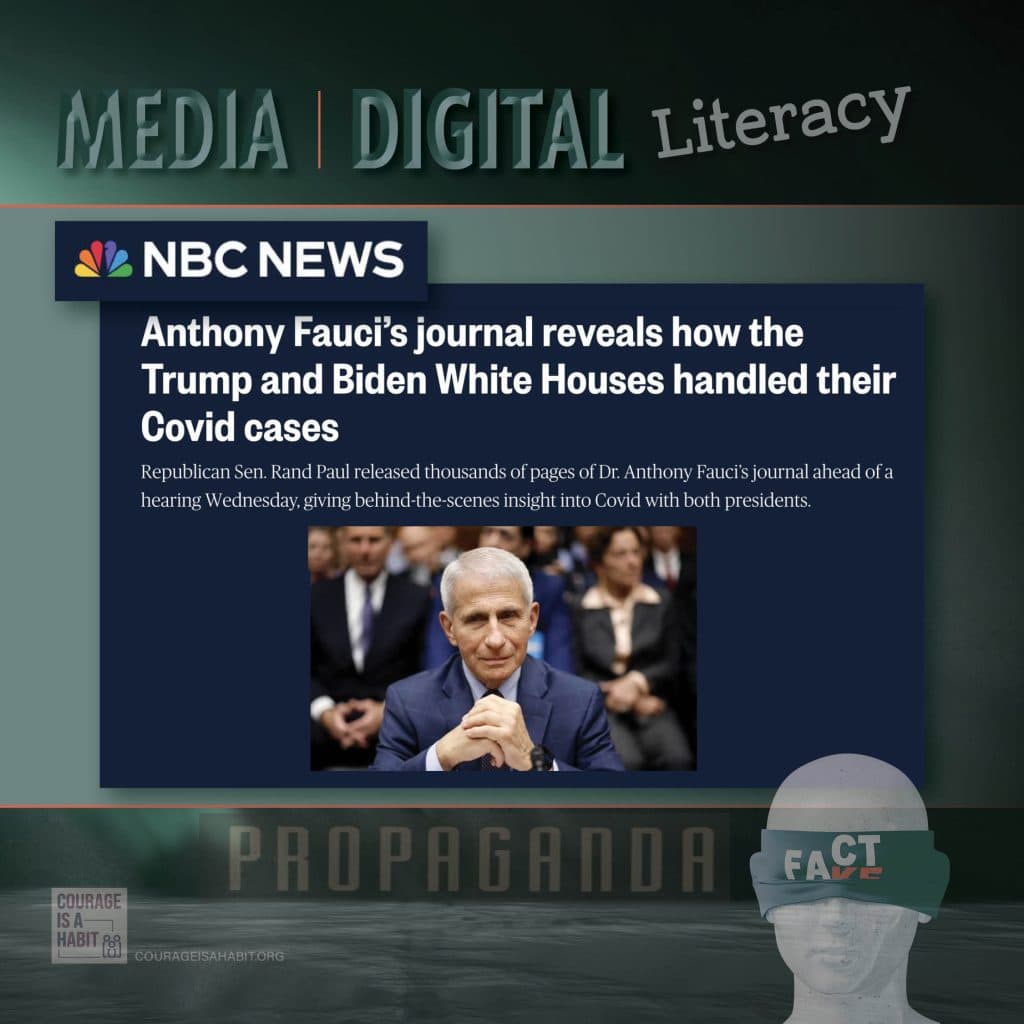
Examples of how the leftwing legacy media framed the damning Anthony Fauci diary exposure: