

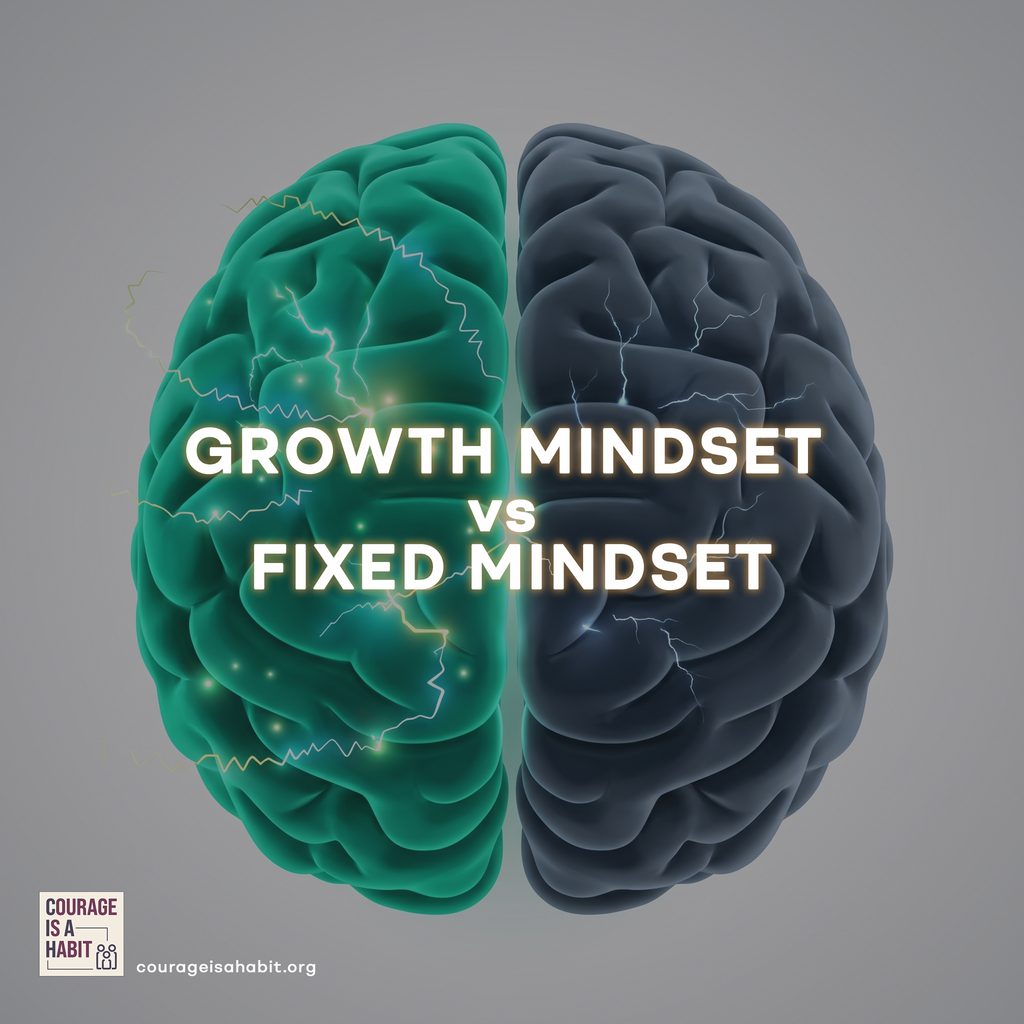
Growth vs Fixed Mindset
When evaluating modern educational curricula, parents and policymakers must ask one foundational diagnostic question: “Through whose lens?”
The reason Social Emotional Learning (SEL) initiatives have effectively misled so many parents and legislators is that radical ideological concepts are consistently packaged within benign, universally accepted terminology. When educational programs claim to teach traits like resilience, empathy, or personal development, the critical issue is not the stated goal, but the worldview driving its implementation.
Consider the application of these concepts:
- A Traditional, Pro-Family Lens: Focuses on strengthening character, respecting family legacy, and building personal responsibility.
- A Critical Theory Lens: Reinterprets traditional values through institutional critique, power dynamics, and systemic opposition to American foundational principles.
The Exploitation of “Growth vs. Fixed Mindset”
A cornerstone of modern SEL programs is the psychological dichotomy between a “Growth Mindset” and a “Fixed Mindset.” In legitimate developmental psychology, this framework encourages academic persistence and valuable habits. Within public school curricula, however, it is frequently co-opted to undermine parental authority and objective truth.
1. The Necessity of Foundational Boundaries (“Fixed Mindset”)
Young children lack the cognitive maturity and life experience required to navigate complex moral and safety decisions independently. Responsible parenting requires instilling firm, non-negotiable boundaries – what SEL advocates label a “Fixed Mindset.”
- Objective Realities & Boundaries: “Do not trust strangers,” “Never touch a hot stove,” “Never wander off without a parent,” and fundamental truths such as “a boy can never be a girl.”
2. The Erosion of Parental Rights (“Growth Mindset”)
Under the guise of fostering a “Growth Mindset,” government K-12 often encourages children to view foundational moral rules, biological realities, and family boundaries as fluid, outdated, or open to personal interpretation.
- Ideological Re-Engineering: “Look to school personnel rather than parents for guidance,” “Biological sex is fluid,” “No human is illegal”, and “It is appropriate to maintain secrets from your family.”
Decoding the Framework: Two Opposing Lenses
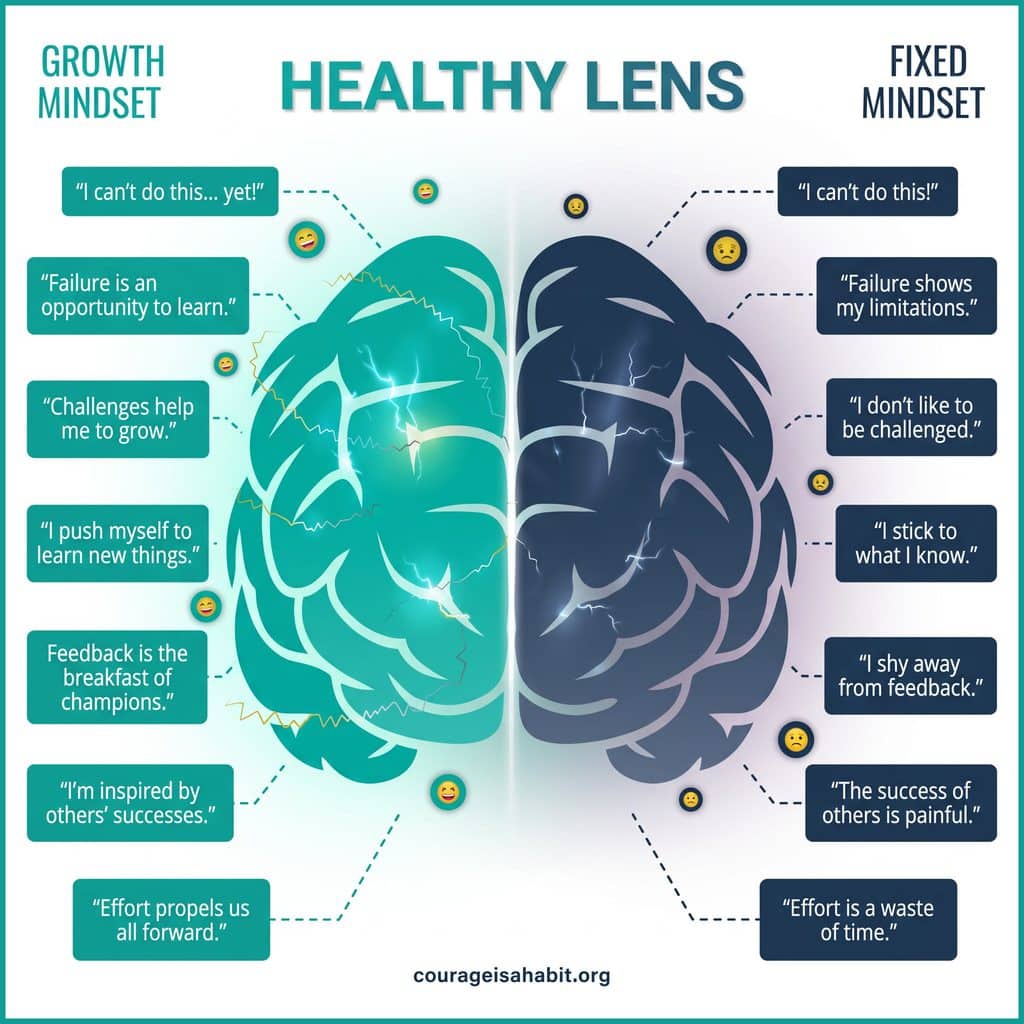
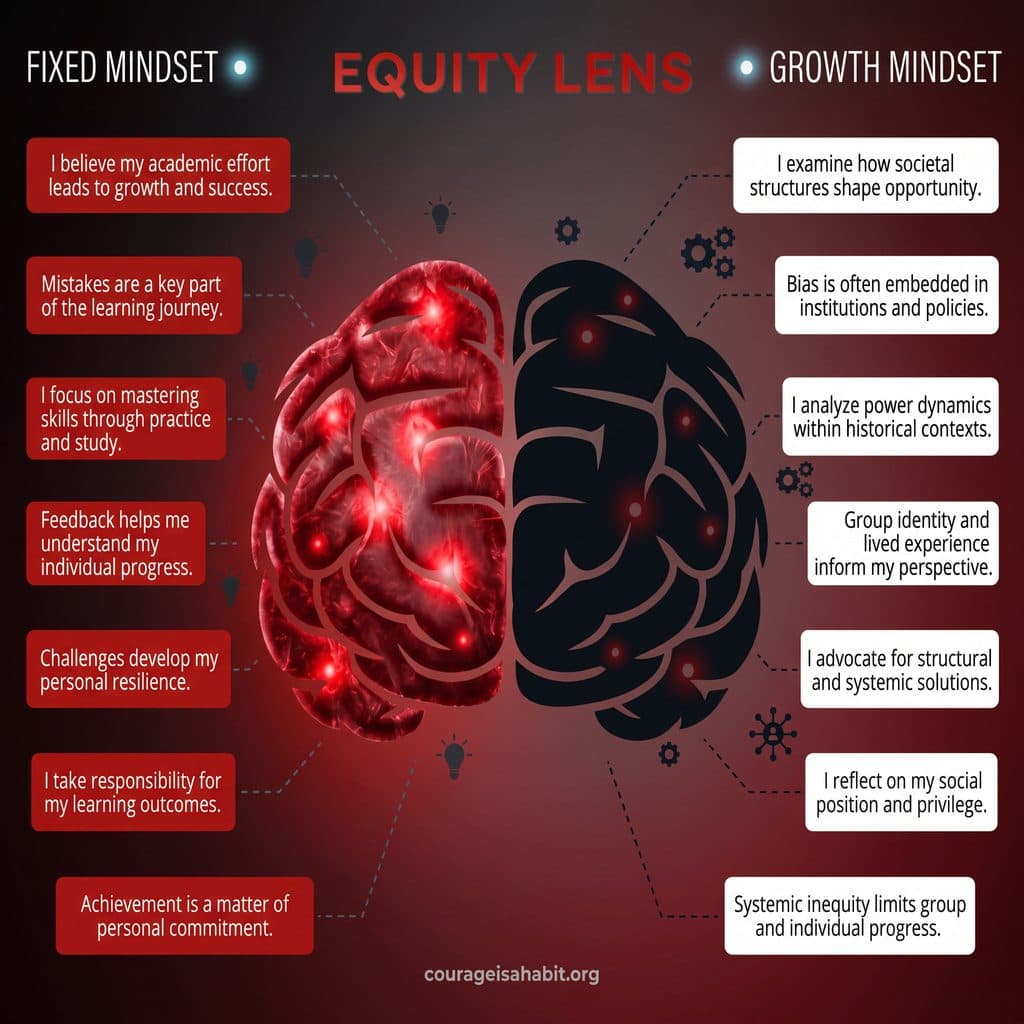
School administrators, teachers, school counselors, and school boards will never disclose how these frameworks are operationally applied within the classroom. The visual comparisons below illustrate the stark contrast between how these terms are presented versus how they are implemented in practice.
- The Healthy Lens: Represents the traditional framework every loving parent seeks to instill – focusing on personal agency, moral clarity, and fundamental character development.
- The Equity Lens: Demonstrates how activist educators utilize “Growth Mindset” language to dismantle foundational truths and embed ideological dogma into school culture.
Without asking “Through whose lens?”, parents are led to believe schools are operating under the first framework, while school cultures are systematically restructured around the second.
Take Action: Protect Your Children and Drive Change
Utilize our tools and tactics below: